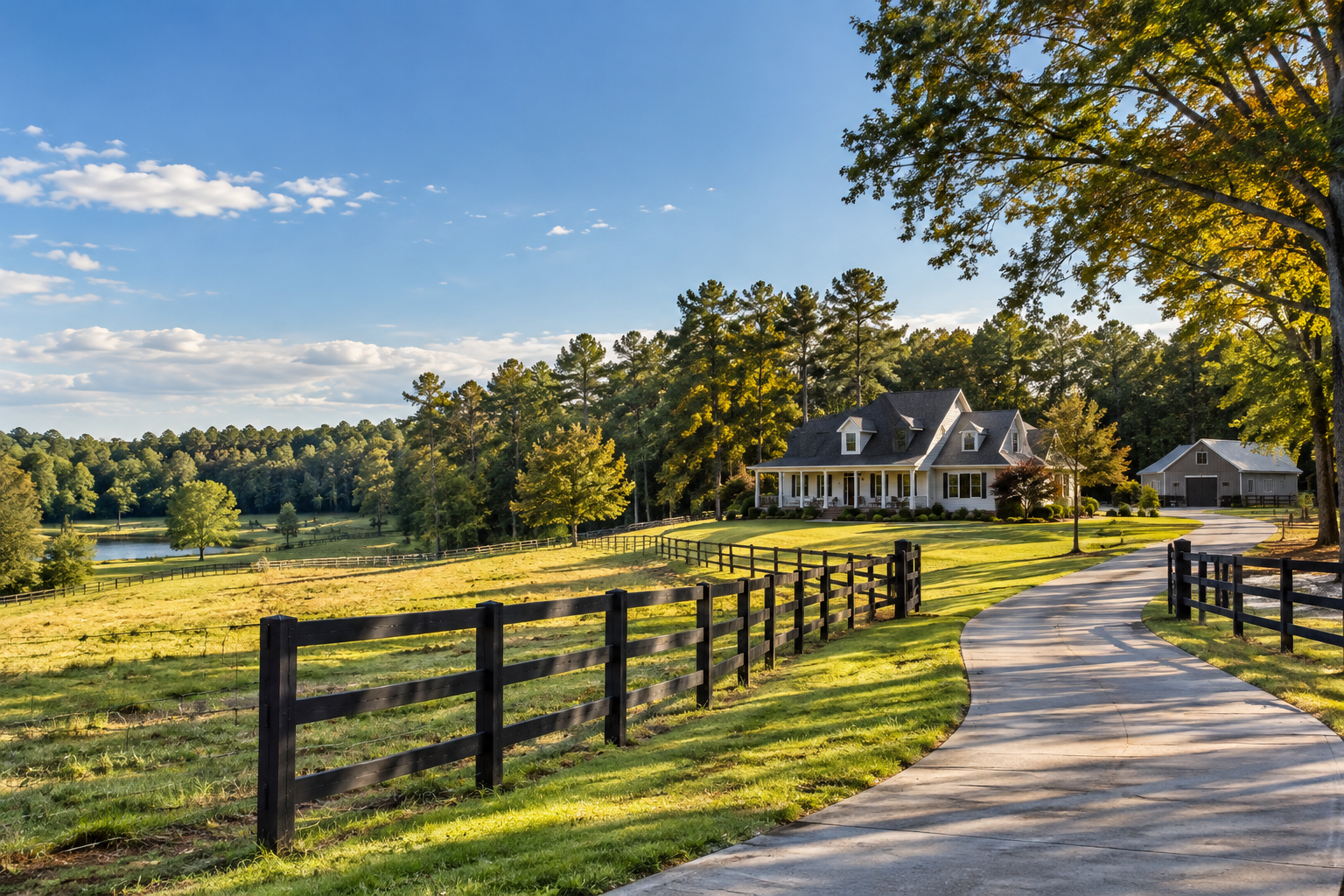
Buying homes with acreage in Coweta County, GA? Verify zoning, well and septic, road access, flood zones, and tax programs before you offer. Land around Newnan, Senoia, and Moreland rewards buyers who do the extra homework.
A few acres of breathing room is one of the biggest reasons buyers look south of Atlanta. Room for a garden, a workshop, a detached garage, a few chickens, or simply a longer view from the back porch — Coweta County still offers that, often within a short drive of downtown Newnan and I-85.
But land changes the buying process. A home on a quarter-acre lot in a subdivision comes with public water, sewer, and a platted boundary. Homes with acreage in Coweta County frequently come with a private well, a septic system, easements, and zoning questions that never come up in town. Miss one of them and a dream property can turn into an expensive surprise.
We’re Mark & Jacqui Robertson, REALTORS® with Berkshire Hathaway HomeServices Georgia Properties, and we walk buyers through rural and semi-rural purchases across Newnan, Sharpsburg, Senoia, Moreland, and Grantville. Here’s what we look at before our clients write an offer.
In This Guide
- Why buyers want acreage
- Zoning and land use
- Well and septic systems
- Road frontage, easements, and surveys
- Flood zones and topography
- Property taxes and conservation use
- Financing and appraisals
- FAQ
Why Are Buyers Looking at Homes With Acreage in Coweta County?
Coweta County sits at a sweet spot: close enough to Hartsfield-Jackson and metro job centers for a reasonable commute, yet rural enough that pastures, hardwoods, and two-lane roads start just minutes outside Newnan’s city limits.
Buyers we talk with usually want one or more of the following:
- Space between houses and more privacy
- Room for a pool, barn, shop, or accessory building
- Gardening, small-scale livestock, or horses (where zoning allows)
- Parking for an RV, boat, or work equipment
- Land that can hold value as the county continues to grow
The key takeaway: acreage buys lifestyle flexibility, but only if the land is legally and physically able to support what you plan to do with it. That’s where due diligence comes in.
What Zoning Rules Apply to Rural Property in Coweta County?
Zoning determines what you can build, keep, and operate on the land. Two parcels of the same size on the same road can carry very different rules — one may allow livestock and accessory structures, while another may restrict them or require minimum setbacks.
Before you fall in love with a property, confirm its zoning district and permitted uses with Coweta County government (or the city, if the parcel sits inside Newnan, Senoia, Grantville, or another municipality). Questions worth asking:
- Are horses, chickens, or other animals permitted, and how many?
- Can I add a detached shop, barn, or guest structure?
- Can the land be subdivided later?
- Is a home-based business allowed?
- Are there HOA covenants or deed restrictions on top of zoning?
Deed restrictions deserve their own look. Some rural “estate lot” communities carry covenants that are stricter than county zoning, so read them before your due diligence period ends.
How Do Well and Septic Systems Affect Your Purchase?
Many rural properties outside Newnan and Senoia are not connected to public water or sewer. That’s perfectly normal — but it means you’re responsible for systems a city utility would otherwise maintain.
Private Wells
Ask for the well’s age, depth, and any service records. A water quality test and a flow (yield) test are smart additions to your inspection, especially if the property has sat vacant. Some parcels have access to county water at the road even if the home uses a well, which is worth knowing for the future.
Septic Systems
A septic inspection — ideally with the tank pumped so the inspector can see its condition — is money well spent. In Georgia, onsite sewage systems are permitted through local environmental health offices under the Georgia Department of Public Health. Ask whether permit records and a drain field diagram exist. If you plan to add bedrooms or a pool, confirm the septic system and drain field location can support it.
What About Road Frontage, Easements, and Surveys?
Rural parcels are where boundary questions show up most often. Fences may not match property lines, driveways may cross a neighbor’s land, and older legal descriptions can be vague.
- Order a current survey. It confirms boundaries, acreage, and encroachments.
- Confirm legal access. Does the property front a public road, or does it rely on a shared driveway or access easement?
- Review easements. Power lines, pipelines, and utility easements can limit where you build.
- Ask about shared driveway agreements. Who maintains the gravel road, and how are costs split?
Your closing attorney and title work will surface recorded easements, but a survey and a walk of the property lines often catch what paperwork misses.
Does the Land Have Flood Zones or Tricky Topography?
Coweta County is laced with creeks and low-lying areas. A property can be mostly high and dry with a strip of floodplain along a creek — which may affect where you can build and whether a lender requires flood insurance.
Look up the parcel on the FEMA Flood Map Service Center early in the process. Then walk the land after a good rain. Drainage, erosion, and slope matter for driveways, outbuildings, and future septic repairs.
Are There Property Tax Programs for Land in Georgia?
Georgia offers a Conservation Use Valuation Assessment (CUVA) program that can lower taxes on qualifying agricultural or timber land in exchange for a multi-year covenant. The catch: if a seller has an active covenant and the new owner breaches it, penalties can apply. Ask the seller directly whether any covenant is in place, and review details with the county tax assessor and the Georgia Department of Revenue.
Don’t forget the standard homestead exemption once the home is your primary residence. For a broader look at local rates and exemptions, see our guide to Coweta County property taxes.
How Does Financing Work for Homes on Acreage?
Financing a home on land is very doable, but it can be less plug-and-play than a subdivision purchase.
- Appraisals can take longer. Truly comparable sales with similar acreage may be spread out, so appraisers sometimes reach farther for comps.
- Loan programs vary on land. Some programs place limits on acreage, outbuildings, or income-producing use. Ask your lender early.
- Location-based programs may apply. Certain rural-eligible loan programs are tied to property location, so check eligibility for the specific address.
- Budget for extra inspections. Well, septic, survey, and possibly a wood-destroying organism report on barns and outbuildings.
Prefer to build your own home on land instead? Our new construction guide for Coweta County covers lot selection and the build process.
Where Should You Start Your Search?
Acreage properties come up across the county — from the rolling roads around Moreland and Grantville to the outskirts of Sharpsburg and Senoia, and into neighboring Heard, Meriwether, and Carroll counties. Inventory is thinner than in-town resale, and the right parcel can move quickly.
Start by defining must-haves: minimum acreage, maximum drive time, and what you plan to do with the land. Then set up a custom search on our property search site so new listings reach you first. If outdoor space is your priority, our roundup of parks and trails in Coweta County is a good way to get to know the area. For national context on rural buying trends, the National Association of REALTORS® research page is a helpful resource.
Frequently Asked Questions
Can I keep horses or chickens on my land in Coweta County?
It depends on the zoning district, lot size, and any deed restrictions or HOA covenants. Confirm permitted uses with Coweta County Planning & Zoning (or the city, if the parcel is inside city limits) before you make an offer.
Should I get a septic inspection when buying a rural home in Georgia?
Yes. A septic inspection, ideally with the tank pumped, helps you understand the system’s condition before your due diligence period ends. Repairs or drain field replacement can be costly, so it’s worth knowing up front.
Is it harder to get a mortgage on a home with acreage?
Not necessarily harder, but it can involve more steps. Appraisals may take longer, and some loan programs set limits on acreage or outbuildings. Talk with your lender early so there are no surprises mid-contract.
Where can I find homes with acreage in Coweta County near Newnan?
Acreage listings appear throughout the county, including areas around Moreland, Grantville, Sharpsburg, and Senoia, often within a short drive of downtown Newnan. A custom MLS search with acreage filters is the fastest way to see new options as they hit the market.
Ready to Find Your Piece of Coweta County?
Buying land-heavy property is exciting — and a little more complex. We’ll help you ask the right questions, line up the right inspections, and move confidently when the right property appears.
Call or text: 678-763-0715
Email: mark.robertson@bhhsgeorgia.com
Website: https://randr.bhhsgeorgia.com/
Relax… we’ve got you covered.
Written by Mark & Jacqui Robertson, REALTORS® with Berkshire Hathaway HomeServices Georgia Properties, serving Newnan, Coweta County, and the South Metro Atlanta area. Information is general in nature and current as of September 2026; confirm zoning, tax, and financing details for any specific property. Equal Housing Opportunity.
Leave a Reply