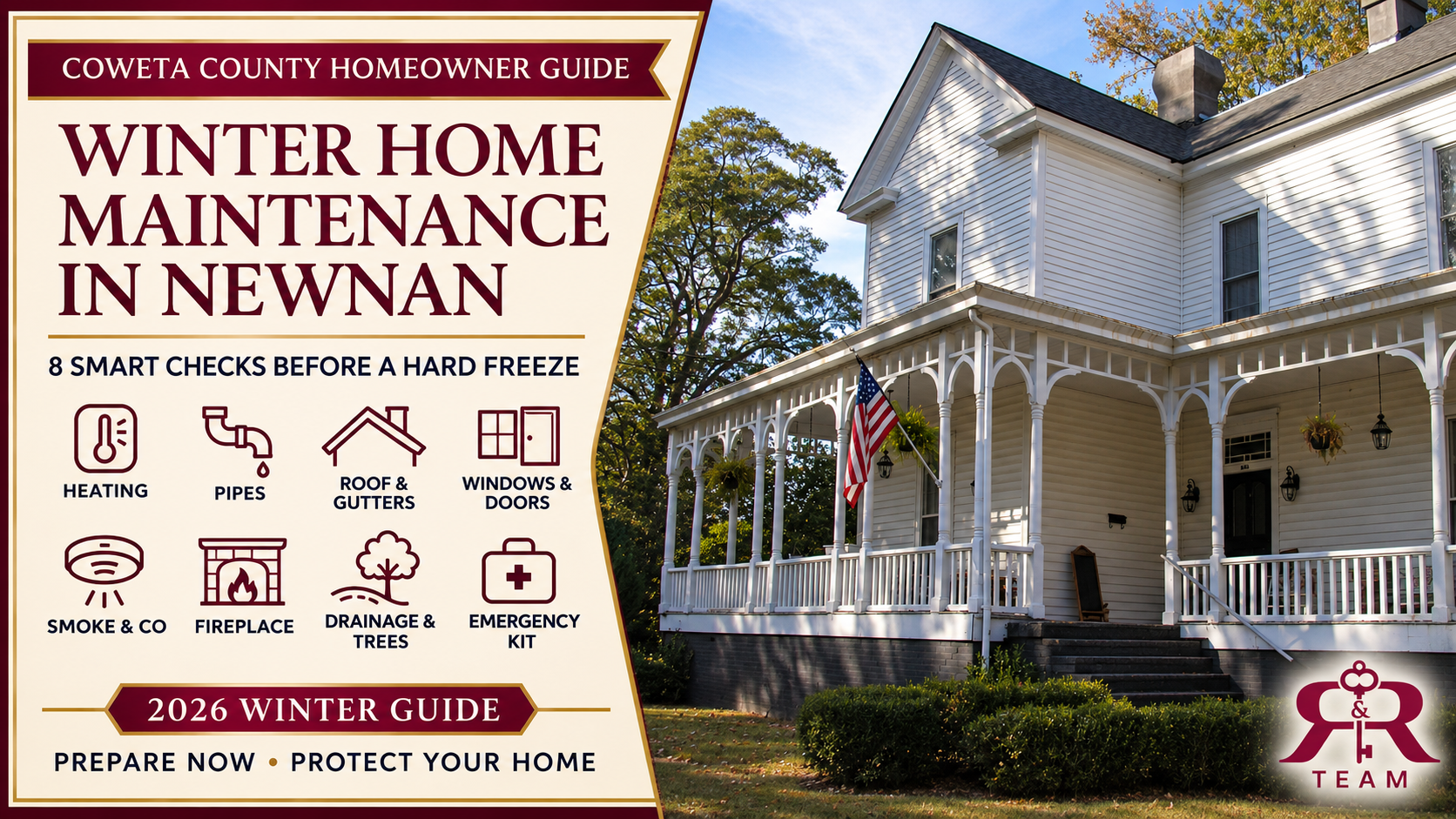
What does winter home maintenance in Newnan GA involve? It means a few hours of checks before the first hard freeze: heating system, pipes, roof and gutters, windows and doors, and safety devices. Coweta County winters are mild but still dip below freezing, so a short checklist protects your home and your budget.
If you own a home in Coweta County, winter home maintenance in Newnan probably is not at the top of your November to-do list. Then a cold snap arrives, a pipe on an exterior wall freezes, and a small oversight becomes a repair bill. A little planning now keeps the season uneventful.
Our winters in South Metro Atlanta are mild compared with much of the country, which is exactly why they catch people off guard. Houses here are often built with pipes in crawl spaces, garages, and exterior walls, and a few nights in the low 20s can be enough to cause trouble. Mark & Jacqui Robertson, REALTORS® with Berkshire Hathaway HomeServices Georgia Properties, have walked through hundreds of Newnan-area homes with buyers and sellers, and the same handful of winter issues come up again and again.
This guide covers eight practical checks. None requires special skills, and together they make winter home maintenance in Newnan manageable on a single weekend. If you are also thinking about a move, a well-maintained home is easier to sell, too.
Why does winter prep matter in a mild climate like Newnan?
Because mild winters create a false sense of security. Freeze protection, heating efficiency, and moisture control matter in Coweta County even if snow is rare. Occasional hard freezes, heavy winter rain, and big temperature swings put stress on plumbing, roofs, and heating systems that do not run much the rest of the year.
The U.S. Department of Homeland Security’s Ready.gov winter weather guide recommends preparing before a storm arrives, not during one. That advice applies here: hardware stores and service companies get busy the moment a freeze is in the forecast.
Your 8-point checklist for winter home maintenance in Newnan
1. Test and service the heating system
Replace the air filter, make sure every vent is open and unblocked, and run the heat for a full cycle before you need it. If the system is more than a few years past its last professional tune-up, schedule one now rather than during the first cold week. Listen for unusual noises and note any uneven heating from room to room.
2. Protect pipes from freezing
Focus on pipes in unheated spaces: crawl spaces, garages, and exterior walls. Foam sleeves are inexpensive and easy to install. Disconnect garden hoses, and shut off and drain outdoor spigots where possible. Know where your main water shut-off is so everyone in the household can find it quickly.
- Open cabinet doors under sinks on exterior walls during a hard freeze.
- Let a faucet drip slowly on the coldest nights.
- Keep the thermostat at a steady temperature, even if you travel.
3. Clean gutters and check the roof
Fallen leaves clog gutters by late fall in Newnan’s tree-lined neighborhoods. Clogged gutters send water against fascia boards and foundations. From the ground, look for missing, curled, or lifted shingles and check flashing around chimneys and vents. If something looks questionable, a licensed roofer can take a closer look.
4. Seal windows and doors
Hold your hand near window and door edges on a breezy day. If you feel a draft, add weatherstripping or caulk. Small gaps add up on a utility bill, and sealing them is one of the quickest wins on the list.
5. Check smoke and carbon monoxide detectors
Heating season is when carbon monoxide risks rise. The U.S. Consumer Product Safety Commission offers a helpful carbon monoxide information center. Test every detector, replace batteries, and check the date on each unit, since detectors do wear out.
6. Inspect the fireplace and chimney
If you use a wood-burning fireplace, have the chimney inspected and cleaned before the first fire. Make sure the damper opens and closes fully, and store firewood away from the house. For gas logs, confirm the pilot and venting are working properly.
7. Look at the yard, drainage, and trees
Walk the lot after a heavy rain and look for pooling near the foundation. Downspouts should carry water several feet away from the house. Trim dead limbs that hang over the roof, since ice or saturated soil and wind can bring them down.
8. Prepare a simple emergency kit
Georgia’s Emergency Management and Homeland Security Agency encourages households to plan for outages. Keep flashlights, batteries, a few days of water and non-perishable food, and a phone charger in an easy-to-reach spot.
A practical tip: do the walkthrough in daylight and keep notes on your phone. Photograph the water heater, shut-off valve, and any spot where you see staining or drafts. Those notes help you prioritize, give a contractor useful detail, and create a baseline you can compare against next year. Spreading the work over two weekends keeps it from feeling like a chore.
How does winter maintenance affect resale value?
Deferred maintenance is one of the first things a buyer’s inspector finds. Fresh caulk, working heat, and dry gutters tell a buyer the home has been cared for. If you are weighing a listing this winter, our guide to selling a house in Newnan before the holidays explains timing, and our post on negotiating repairs after a home inspection in Georgia shows why small fixes made early can keep a contract on track.
Buyers also benefit. If you recently purchased in Sharpsburg, Senoia, Peachtree City, or Grantville, a first-winter walkthrough helps you learn how the house behaves in cold weather. Note anything that feels off and ask your inspector or a qualified contractor.
What should you do in spring?
Good winter home maintenance in Newnan is half of the seasonal rhythm. Once temperatures warm, our spring home maintenance tips for Coweta County cover the follow-up checks, from air conditioning service to exterior caulking.
Frequently asked questions
When should Newnan homeowners winterize their homes?
Late October through November is a good window. The goal is to finish before the first forecasted hard freeze, which in our area can arrive anywhere from late November to January.
Do I need to cover outdoor faucets in Coweta County?
It is a smart, inexpensive step. Disconnect hoses and use an insulated cover. If your home has a shut-off valve for exterior spigots, closing it and draining the line adds protection.
How can I lower heating costs without replacing my system?
Start with filters, weatherstripping, and ducts that are open and unblocked. A programmable thermostat can help, too. Small improvements add up over a season.
Should sellers do winter maintenance before listing?
Yes. Working heat, dry gutters, and sealed windows help a home show well and can reduce inspection surprises. We are happy to walk through your property and prioritize fixes before you list.
Talk with a local team
Whether you are maintaining a home you love or planning your next move, we are glad to help. Please give us a call.
Mark & Jacqui Robertson, REALTORS®
Berkshire Hathaway HomeServices Georgia Properties
Call or text: 678-763-0715
Email: mark.robertson@bhhsgeorgia.com
Website: https://randr.bhhsgeorgia.com/
Written by Mark & Jacqui Robertson, REALTORS® with Berkshire Hathaway HomeServices Georgia Properties. Published November 2026. This article is general information, not professional repair, legal, or financial advice.
Leave a Reply